
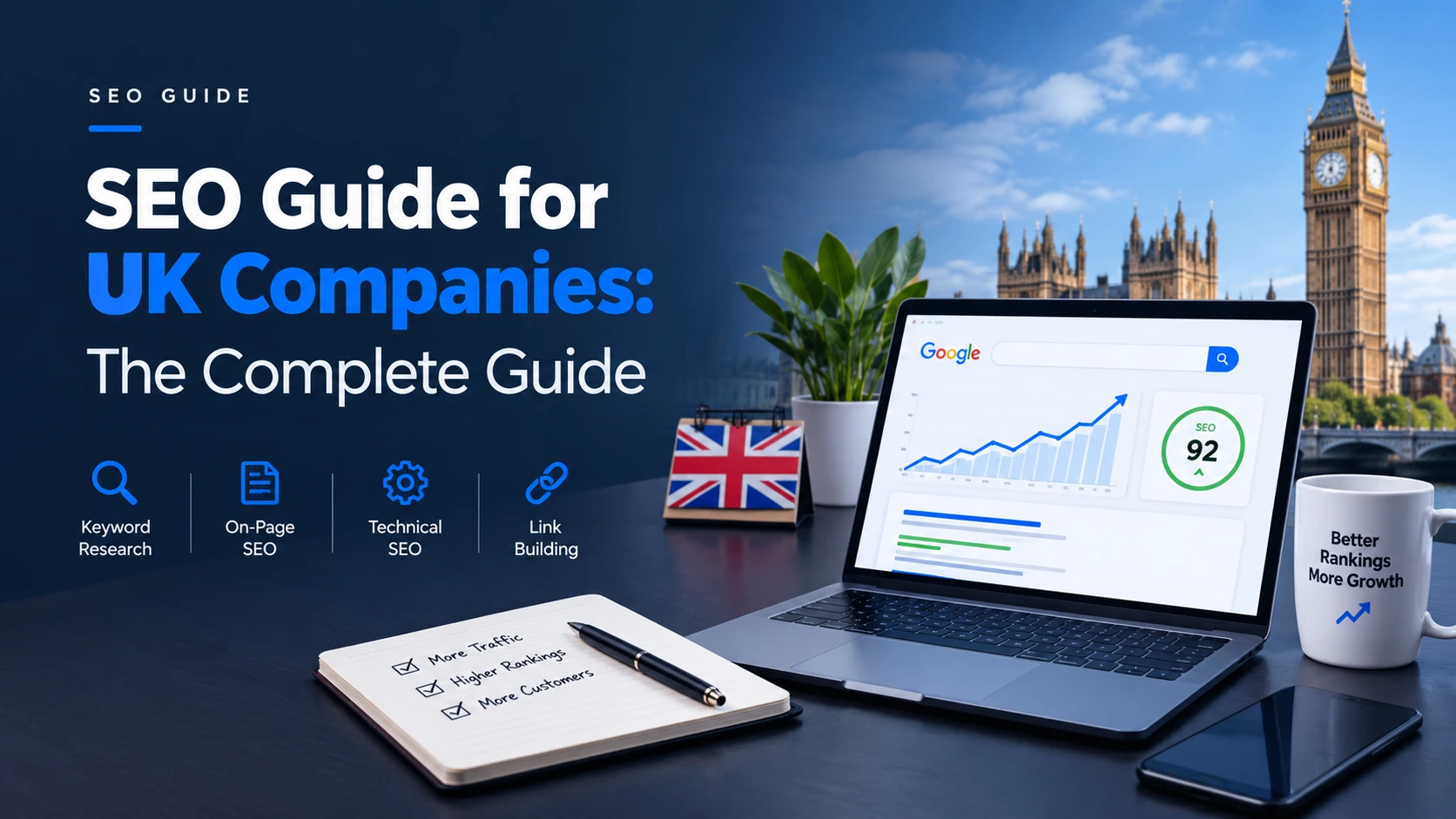
SEO is often made to sound either complicated or too simple, but it is actually a clear set of steps that can be learned and applied. When these steps are done properly, they can help your website get more visibility in search results. This guide explains what UK companies need to know about SEO, including keyword research, on-page SEO, technical SEO, content, link building, and how to measure your results. Everything is explained in simple terms, with practical advice you can use.
What Is SEO, and Why Does It Actually Matter?
SEO, search engine optimisation, is the practice of improving a website so it ranks higher in Google’s organic, unpaid search results. It matters because search remains one of the primary ways people discover businesses, and unlike paid advertising, the visibility SEO builds keeps working without ongoing spend once it’s established. The trade-off is time, SEO is a compounding investment, not an instant one, and understanding that upfront prevents the most common source of frustration with it.
Keyword Research: The Starting Point
Every SEO strategy should start here, not with content, not with technical fixes. Keyword research means identifying the actual terms your potential customers are typing into Google, and being honest about how competitive each one is before committing resources to it. A common mistake is chasing broad, high-volume terms that are hopelessly competitive for a smaller company, while ignoring more specific, lower-competition terms that are both more achievable and often closer to actual buying intent.
On-Page SEO: Getting the Fundamentals Right
On-page SEO covers everything within your direct control on a given page: title tags, meta descriptions, header structure, and how naturally your target keywords appear within genuinely useful content. The goal isn’t stuffing keywords in artificially, modern search engines penalise that, it’s making sure a page clearly and naturally signals what it’s about, to both search engines and the actual human reading it.
Technical SEO: The Foundation Most Companies Overlook
Technical SEO covers the underlying health of a website, page load speed, mobile responsiveness, secure connections, clean site structure, and making sure search engines can actually crawl and index every page properly. It’s the least visible part of SEO, nobody notices good technical SEO, but a technical problem can quietly cap how well every other piece of SEO work performs, no amount of great content overcomes a site that loads too slowly or isn’t properly indexed.
Content Strategy: Why Content Still Matters
Content, blog posts, guides, resource pages, gives search engines fresh, relevant material to index and gives your business a way to demonstrate genuine expertise rather than just claiming it. The strongest content answers real questions your potential customers are actually asking, rather than existing purely to contain keywords. This is also increasingly important for how AI-powered search tools generate direct answers, well-structured, genuinely useful content is exactly what these systems tend to pull from.
A practical starting point: write down the ten questions your customers ask most often before buying, on the phone, in person, in enquiry emails, and build content around answering each one thoroughly. This produces genuinely useful material far more reliably than guessing at keywords in isolation, because it’s grounded in real, observed customer behaviour rather than assumption.
Off-Page SEO and Link Building
Off-page SEO covers signals from outside your own website, most importantly, other reputable websites linking to yours. Each quality link acts as a vote of confidence in Google’s eyes. This is also the area most prone to shortcuts and manipulation, buying links or mass-submitting to low-quality directories tends to do more harm than good long-term. Genuine, earned links, through real relationships, press coverage, or content worth linking to, remain the sustainable approach.
Should You Handle SEO Yourself, or Work With an Agency?
This depends honestly on time, expertise, and how much is genuinely at stake. A motivated business owner can learn and apply the fundamentals covered in this guide, keyword research, on-page basics, simple technical fixes. Where it typically becomes worth outsourcing is the ongoing, coordinated execution across every area simultaneously — technical SEO, content, link building, and measurement — done consistently over months. This can be considerably harder to sustain alongside actually running a business. For businesses that want professional support, XpertRanker is a digital marketing agency based in Stockton-on-Tees, helping UK businesses improve their SEO and online visibility.
Local SEO: A Special Case for UK Companies With a Physical Location
If your company serves customers in a specific area, local SEO adds a further, more specific layer: a properly optimised Google Business Profile, consistent business details across the web, and genuine local relevance in your website content. Local search results prioritise proximity and local relevance heavily, meaning a smaller, genuinely local company can often out-rank considerably larger national competitors for searches tied to their specific area.
Measuring SEO Success: What to Actually Track
Rankings alone are an incomplete picture. A more honest set of metrics includes organic traffic growth over time, impressions and click-through rate in Google Search Console, and, most importantly, actual enquiries or sales attributable to organic search, not just visits. Tracking rankings for a handful of vanity keywords while ignoring whether any of it converts into real business is one of the most common ways SEO effort gets misjudged as either working or failing.
Google Search Console is worth setting up before any other SEO work begins, not after, since it’s the free, direct source of this data, and without a baseline recorded from the start, it becomes impossible to honestly measure how much actual progress has been made months later.
Common SEO Mistakes UK Companies Make
A few patterns show up repeatedly: focusing entirely on one area, usually content, while ignoring technical health or link building, which limits how far that content work can actually go. Expecting results within weeks rather than understanding SEO as a months-long, compounding process. Chasing broad, highly competitive keywords while ignoring more specific, achievable ones closer to genuine buying intent. And treating SEO as a one-off project rather than an ongoing discipline, competitors and Google’s own algorithm don’t stand still, so neither should the work. If auditing your own approach against this list feels daunting, our SEO service is built around methodically working through exactly these areas, one at a time, rather than trying to fix everything simultaneously.
How Long Does SEO Realistically Take?
Foundational work, technical fixes, on-page optimisation, a properly configured Google Business Profile where relevant, can show measurable movement within weeks. Competing seriously for the most contested keywords in a given industry typically takes months of sustained, consistent effort. Anyone promising guaranteed rankings on a fixed, short timeline isn’t being fully honest, no one controls Google’s algorithm outright, and the most reliable predictor of SEO success is consistency over time, not any single tactic.
Frequently Asked Questions
How long does SEO take to show results?
Foundational improvements can show movement within a few weeks, while competing for highly contested keywords typically takes several months of consistent, ongoing work.
Is SEO still worth it for UK companies in 2026?
Yes. Search remains one of the primary ways people discover businesses, and unlike paid advertising, the visibility SEO builds continues working without ongoing spend once established.
What’s the biggest SEO mistake companies make?
Treating SEO as a short-term project with a fixed end date rather than an ongoing discipline. Competitors and search engine algorithms both keep changing, so consistent, ongoing attention matters more than any single tactic.
Do I need technical SEO knowledge to get started?
Not to get started, the fundamentals in this guide, keyword research and on-page basics, are accessible without deep technical knowledge. Technical SEO becomes more important as a site grows in size and complexity.
Should SEO budget go toward content, technical fixes, or links first?
If forced to choose one starting point, technical SEO deserves attention first, since unresolved technical issues can silently limit how well content and link-building efforts perform afterward, regardless of how good that work is on its own.
Putting This Into Practice
SEO rewards consistency far more than any single clever tactic. Starting with proper keyword research, getting on-page and technical fundamentals right, building genuinely useful content, and earning links over time, applied steadily rather than in short bursts, is what actually produces lasting results. Whichever parts of this guide you tackle first, the important thing is starting somewhere and staying consistent with it.